What onchain referral bounties actually are
Onchain referral bounties are automated incentive programs where smart contracts manage the entire lifecycle of a referral. Unlike traditional web2 referral systems that often rely on manual verification or opaque backend logic, onchain programs execute instantly and transparently on the blockchain. When a user invites someone who completes a specific action—such as swapping tokens or providing liquidity—the smart contract automatically distributes the reward to both parties.
This shift moves referral marketing from a "trust me" model to a "trust code" model. The core difference lies in the automation. Smart contracts handle tracking, eligibility verification, and distribution without human intervention. This eliminates the risk of withheld payments or delayed payouts, which are common friction points in traditional affiliate and referral programs. For builders, this means you can launch aggressive growth campaigns with minimal operational overhead.
The result is a system that aligns incentives perfectly. Referrers know exactly when and how much they will earn, and referees receive immediate value for joining. This transparency builds trust faster than any marketing copy, making onchain bounties a powerful tool for organic user acquisition in decentralized ecosystems.
Comparing top referral infrastructure tools
Choosing the right infrastructure for onchain referral bounties comes down to matching your tech stack with your reward model. Some tools are built for simple link tracking, while others provide full smart contract automation for complex, multi-tier distributions. The best fit depends on whether you prioritize developer ease-of-use or granular control over the payout logic.
OnchainPay: Developer-First Automation
OnchainPay focuses on abstracting the complexity of onchain payments. It allows builders to integrate referral payouts directly into their dApp with minimal code. The platform handles the transaction batching and gas optimization, which is critical when dealing with high-frequency referral claims. This makes it ideal for projects that want a "set it and forget it" payment layer without managing individual smart contract interactions for every referral event.
HackenProof: Security-Backed Verification
HackenProof takes a different approach by integrating referral rewards with its security audit ecosystem. Their referral program is designed to incentivize community-driven security research and bug reporting. The infrastructure here is less about generic affiliate tracking and more about verifying unique, high-value contributions. If your referral model relies on rewarding specific technical achievements or security finds rather than simple user acquisitions, HackenProof’s verification layer adds a necessary layer of trust and fraud prevention.
Chainstack: Infrastructure for Scale
For projects requiring massive scale, Chainstack offers the underlying node infrastructure that powers reliable referral tracking. While not a direct payout tool, its robust API and node services ensure that referral events are recorded and synced without latency. This is essential for high-traffic dApps where missed or delayed referral data could lead to payout disputes. Chainstack is the backbone choice for teams building their own custom referral contracts on top of reliable, decentralized infrastructure.
| Feature | OnchainPay | HackenProof | Chainstack |
|---|---|---|---|
| Primary Focus | Automated Payouts | Security Verification | Node Infrastructure |
| Best For | Simple referral links | Bug bounty referrals | High-scale dApps |
| Smart Contract | Integrated | Integrated | Custom Integration |
| Gas Optimization | High | Medium | N/A |
| Fraud Prevention | Basic | Advanced | N/A |
| Tool | Primary Focus | Best For | Smart Contract | Gas Optimization | Fraud Prevention |
|---|---|---|---|---|---|
| OnchainPay | Automated Payouts | Simple referral links | Integrated | High | Basic |
| HackenProof | Security Verification | Bug bounty referrals | Integrated | Medium | Advanced |
| Chainstack | Node Infrastructure | High-scale dApps | Custom Integration | N/A | N/A |

Making the Decision
If your goal is to launch a referral program quickly with minimal backend work, OnchainPay is the most straightforward option. It handles the heavy lifting of onchain transactions, allowing you to focus on user acquisition. For projects where the "referral" is a security finding or a complex technical contribution, HackenProof provides the necessary verification framework to ensure rewards go to legitimate contributors.
For teams building large-scale dApps with custom referral logic, Chainstack provides the reliable infrastructure needed to support high-volume data syncs. You’ll need to build your own payout contracts, but you’ll have the node reliability to support millions of referral events without downtime. The right choice depends on whether you value speed of implementation or the flexibility to customize every aspect of the referral lifecycle.
Market trends in AI crypto referral loops
The intersection of artificial intelligence and decentralized finance has shifted from hype to utility, with referral mechanisms becoming the primary growth engine for infrastructure projects. Unlike traditional marketing, onchain referral bounties offer transparent, programmable incentives that align creator rewards with genuine user acquisition. This transparency allows builders to test growth strategies in real-time, adjusting parameters based on onchain data rather than vanity metrics.
AI infrastructure projects are particularly well-positioned to leverage these loops. Their value proposition often requires complex setup or technical understanding, making peer-to-peer education a critical conversion factor. Referral programs effectively monetize this social proof, turning early adopters into active distribution nodes. The market is seeing a surge in projects that automate bounty distribution through smart contracts, reducing friction and ensuring instant payout upon successful referral actions.
While platforms like Crypto.com have popularized broad-based referral campaigns with caps and tiers, the emerging trend in AI crypto is more nuanced. Projects are increasingly moving toward uncapped, performance-based rewards that scale with the referral's activity. This approach encourages long-term engagement rather than one-time sign-ups, creating a more sustainable user base. The focus is shifting from volume to value, rewarding those who bring in users who actually interact with the protocol.
To understand the financial impact of these trends, it is helpful to observe the performance of leading AI tokens. Their price action often correlates with major protocol updates or successful referral campaign launches, reflecting market sentiment around growth potential.
Building a strategy for sustainable growth
A well-structured referral program is less about quick hacks and more about engineering a system that rewards genuine engagement while filtering out noise. To build sustainable growth, you need to move beyond simple link-sharing and implement logic that verifies user quality. This approach protects your treasury from sybil attacks and ensures that every bounty paid brings real value to the protocol.
1. Automate verification with smart contracts
Manual tracking is a bottleneck that invites disputes and delays. By deploying smart contracts to handle the referral lifecycle, you create a transparent, immutable record of every interaction. Automation ensures that rewards are distributed instantly upon meeting specific on-chain criteria, such as a minimum transaction volume or a completed onboarding step. This trustless execution removes administrative overhead and builds immediate credibility with early adopters.
2. Implement tiered reward structures
Flat-rate bounties often attract low-intent users looking for quick payouts. Instead, structure your rewards in tiers based on the referred user’s activity level. For example, a base bonus for signing up, a larger payout for the first trade, and additional incentives for sustained volume over 30 days. This tiered model aligns your incentives with long-term retention, encouraging referrers to seek out high-quality users rather than just filling a quota.
3. Add anti-sybil safeguards
Sybil attacks are the biggest threat to onchain referral bounties. To mitigate this, integrate identity verification tools or require on-chain activity thresholds before a referral is counted. You might limit rewards to unique wallets that have held a specific token for a set period or require a small deposit that is refunded upon successful completion of the referral journey. These filters ensure that your bounty program rewards real humans, not bots.
4. Monitor and adjust based on data
Once your program is live, treat it as a dynamic experiment. Use analytics dashboards to track key metrics like referral conversion rates, cost per acquired user, and the lifetime value of referred participants. If you notice a spike in churn among referred users, tighten your verification criteria or adjust the reward timing. Regularly reviewing this data allows you to optimize the program for efficiency without sacrificing growth momentum.
Review your existing smart contract code to identify potential vulnerabilities. Look for hard-coded values that could be manipulated and ensure that referral tracking is tied to verifiable on-chain events rather than off-chain claims.
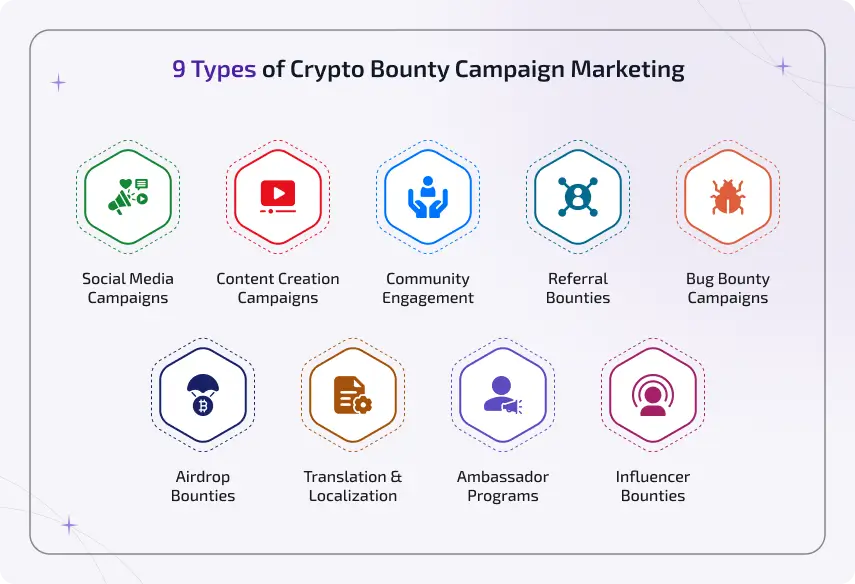
Establish specific, measurable actions that qualify a referral. Whether it’s a minimum deposit amount, a swap volume, or holding a token for a week, clear criteria prevent ambiguity and reduce the need for customer support interventions.
Before a full public launch, incentivize security researchers to test your referral contracts. A bug bounty program can help identify edge cases or exploit vectors that internal testing might miss, ensuring a more robust launch.

Open the program to a small group of trusted users first. Monitor the system for any unexpected behaviors or reward distribution errors. Once stable, scale up to the broader community while keeping a close eye on the cost per acquisition.
Frequently asked questions about bounties
Onchain referral bounties differ from traditional affiliate programs because the entire lifecycle—tracking, verification, and payout—happens on-chain via smart contracts. This transparency reduces the risk of non-payment but introduces complexity around gas fees and contract security.
How are referral rewards distributed?
Rewards are typically distributed automatically when a referred user completes a qualifying action, such as a trade or deposit. Platforms like HackenProof use smart contracts to calculate and release rewards in real-time, ensuring that the referrer receives their cut without manual intervention or delay.
What counts as a "qualified" referral?
A qualified referral usually requires the new user to perform a specific on-chain action within a set timeframe. This often means making a minimum trade volume, depositing a certain amount of liquidity, or staking assets. The exact criteria vary by protocol, so always check the specific bounty terms.
Are there any risks for referrers?
The primary risk is smart contract vulnerability. If the bounty contract is exploited, rewards may be lost. Additionally, some protocols require you to stake tokens to participate, exposing you to impermanent loss or price volatility. Always audit the contract or rely on platforms with verified, audited code.
How do gas fees affect earnings?
On Ethereum mainnet, high gas fees can eat into small bounty rewards. Many referral programs operate on Layer 2 solutions like Arbitrum or Optimism to minimize costs. Always calculate the expected net reward after accounting for transaction fees to ensure the effort is worthwhile.
Helpful gear
Use these product recommendations as a starting point, then choose the size, material, and price point that fit how you actually use the gear.


![Bybit Referral Code BY500 [2026]: How to use Bybit referral code, fee discount, bonus terms](https://m.media-amazon.com/images/I/71vJGFMWXhL._AC_UL960_QL65_.jpg)
As an Amazon Associate, we may earn from qualifying purchases.
No comments yet. Be the first to share your thoughts!