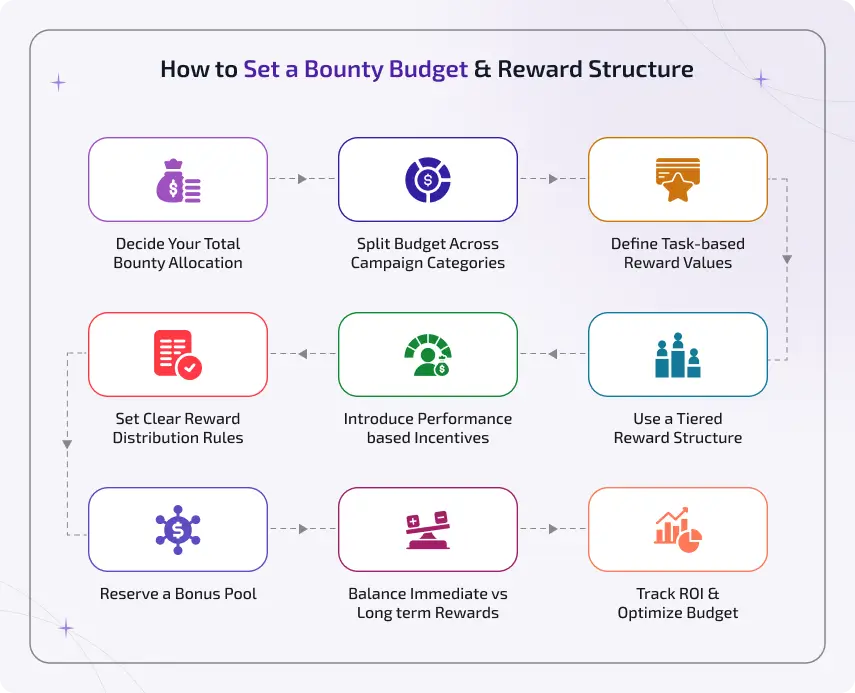
What Is an Onchain Referral Bounties Strategy?
An onchain referral bounties strategy uses smart contracts to automate tracking and payouts, removing intermediaries and increasing transparency compared to traditional off-chain referral programs. This approach allows projects to incentivize user acquisition through verifiable, immutable records on the blockchain, ensuring that rewards are distributed fairly and instantly.
The core mechanism involves a smart contract that mints tokens or NFTs as rewards when a referred user completes a specific action, such as a swap, liquidity provision, or protocol interaction. This automation reduces operational overhead and eliminates the risk of manual payout errors or disputes.
However, this strategy is not without tradeoffs. While transparency is high, the public nature of onchain data means that referral activities are visible to all, which can lead to gaming or sybil attacks if not properly mitigated. Projects must carefully design their incentive structures to balance attractiveness for genuine users with robustness against bad actors.
| Feature | Onchain | Offchain |
|---|---|---|
| Payout Speed | Instant | Days to Weeks |
| Transparency | Public Ledger | Private Database |
| Intermediary Costs | Minimal (Gas) | High (Platform Fees) |
| Security | Smart Contract Audits | Centralized Server Security |
Choosing the Right Approach
For projects prioritizing speed, transparency, and low operational friction, onchain referral bounties are the superior choice. They are particularly effective in decentralized finance (DeFi) ecosystems where users are already comfortable with wallet interactions and token incentives.
However, if your target audience is largely non-crypto native or if you require complex, off-chain verification steps (such as KYC or real-world identity checks), a hybrid model or traditional off-chain system might be more appropriate. In such cases, the complexity of integrating onchain rewards with off-chain data can outweigh the benefits of automation.
Ultimately, the decision hinges on your user base and risk tolerance. For high-stakes, high-visibility campaigns, the immutable nature of onchain referrals provides a level of trust and efficiency that off-chain systems simply cannot match.
Onchain referral bounties strategy choices that change the plan
Selecting the right infrastructure for your onchain referral bounties strategy requires balancing immediate yield against long-term security and operational complexity. Unlike traditional affiliate programs that rely on opaque tracking pixels, onchain referrals use smart contracts to automate tracking and payouts, removing intermediaries and increasing transparency. However, this transparency comes with specific tradeoffs regarding gas costs, user experience, and platform risk.
When evaluating platforms, you must weigh the benefits of native smart contract integration against the convenience of offchain tracking layers. Native integrations offer superior auditability but can suffer from high transaction fees during network congestion. Offchain solutions provide a smoother user experience but require trust in centralized databases to validate referrals before onchain settlement.
The following comparison breaks down the primary tradeoffs across cost, security, and scalability. Use this framework to determine which model aligns with your project’s current stage and budget.
| Factor | Native Smart Contract | Hybrid Offchain | Centralized Platform |
|---|---|---|---|
| Gas Costs | High (user pays per ref) | Low (batched settlement) | None (platform absorbs) |
| Transparency | Full onchain visibility | Partial (audit log) | Opaque (black box) |
| Security Risk | Smart contract exploits | Database manipulation | Platform insolvency |
| User Friction | High (wallet signing) | Medium (KYC/Link) | Low (email/link) |
| Payout Speed | Instant (automated) | Delayed (batched) | Variable (manual review) |
For projects prioritizing maximum yield and trustless operations, native smart contract referrals are the superior choice despite the higher gas friction. The cost of gas is often negligible compared to the value of the bounty, and the immutable nature of the contract provides a competitive moat for user trust. However, for mass-market adoption, hybrid models that batch transactions on Layer 2 networks offer a pragmatic middle ground.
When implementing your strategy, always audit the referral contract’s payout logic. Ensure that the contract includes mechanisms to prevent sybil attacks, such as minimum holding requirements or unique onchain signatures. The security of your bounty pool depends less on the platform’s brand and more on the rigor of your smart contract’s validation rules.
Choose your onchain bounty path
Onchain referral bounties automate tracking and payouts through smart contracts, removing intermediaries and increasing transparency compared to traditional programs. This structure allows protocols to scale influencer and developer incentives without manual reconciliation. To maximize yield, you must select a platform that aligns with your specific operational model, whether that involves bug hunting, community growth, or technical infrastructure.
1. Evaluate your primary incentive goal
Your first decision hinges on what you are rewarding. If your priority is security and code integrity, platforms like HackenProof provide structured referral programs tied to verified bug bounties. These are ideal for protocols needing rigorous security audits and payouts based on severity. Conversely, if your goal is user acquisition or developer adoption, you should look for platforms with robust attribution tracking, such as Onchain Referral Bounties, which focus on automating rewards for successful user referrals or developer integrations.
2. Compare platform infrastructure and costs
The efficiency of your bounty program depends on the underlying technology. Legacy referral systems often rely on centralized databases prone to fraud and delay. Modern onchain solutions use smart contracts to ensure instant, transparent payouts. When comparing options, prioritize platforms that offer:
- Automated Payouts: Smart contracts that release rewards immediately upon verification.
- Fraud Prevention: Onchain verification of referral sources to prevent sybil attacks.
- Transparent Metrics: Publicly verifiable data on clicks, conversions, and payouts.
3. Select the right tool for your use case
There is no single best platform; the choice depends on your technical maturity and budget. For security-focused projects, dedicated bug bounty platforms with referral tiers offer the highest trust. For growth-focused projects, general onchain referral infrastructure provides the flexibility to reward a wider range of activities. Consider the total cost of ownership, including gas fees and platform commissions, when making your final decision.
| Feature | Security Bounty | Growth Referral |
|---|---|---|
| Primary Goal | Code Vulnerabilities | User/Developer Acquisition |
| Payout Speed | Post-Audit | Instant/Smart Contract |
| Fraud Risk | Low (Verified) | Medium (Needs Tracking) |
| Best For | DeFi Protocols, Web3 Apps | L1s, DApps, Communities |
Decision framework
Start by defining your core metric. If you need to find and fix vulnerabilities, choose a security-focused bounty platform. If you need to grow your user base or developer ecosystem, choose an onchain referral infrastructure tool. Always test with a small budget to verify tracking accuracy before scaling your campaign.

As an Amazon Associate, we may earn from qualifying purchases.
Identify Weak Options and Misleading Claims
Onchain referral bounties promise automated payouts via smart contracts, but the infrastructure gap between promise and execution often traps participants. Many platforms advertise "zero-friction" rewards while hiding significant gas costs or opaque tracking logic in their documentation. Before committing capital, you must verify how the protocol handles dispute resolution and whether the smart contract code has undergone independent audit.
The primary risk lies in the comparison between traditional web2 referral systems and onchain implementations. Web2 platforms offer centralized support but lack transparency. Onchain systems provide immutability and transparency but require users to manage their own wallet security and transaction fees. A misleading claim often appears when projects exaggerate the yield by ignoring the volatility of the reward token or the cost of bridging assets across chains.
To navigate this, look for projects that publish their contract addresses on Etherscan or similar explorers and link to their HackenProof or similar audit reports. Avoid platforms that rely solely on whitepapers without verifiable on-chain data. The decision to participate should hinge on the clarity of the payout mechanism and the credibility of the development team, not just the advertised APY. Always calculate the net yield after gas fees to ensure the strategy remains profitable in a bear market.
Frequently Asked Questions on Onchain Referral Bounties
How do onchain referral bounties differ from traditional programs?
Traditional referral systems rely on opaque, centralized databases to track clicks and conversions, creating opportunities for fraud and delayed payouts. Onchain referral bounties use smart contracts to automate tracking and payouts, removing intermediaries entirely. This infrastructure ensures that every referral is immutable and transparent, reducing fraud and building user trust through verifiable blockchain records rather than hidden admin controls.
What are the main risks of participating in onchain bounties?
The primary risks involve smart contract vulnerabilities and platform insolvency. If the underlying code contains bugs, hackers could exploit the contract to drain reward pools. Additionally, the value of your rewards is often tied to volatile tokens; a sudden market downturn can significantly reduce your yield even if you successfully referred many users. Always audit the contract’s security history before committing time or capital.
Can I track my referrals in real time?
Yes, unlike traditional programs that may update weekly, onchain referrals update instantly on the blockchain. You can monitor your referral status and pending rewards directly through the platform’s dashboard or by viewing the contract on a block explorer. This real-time visibility allows you to adjust your strategy immediately based on actual conversion data rather than estimated metrics.
Are onchain referral rewards taxable?
In most jurisdictions, receiving crypto tokens from a referral bounty is considered taxable income at the fair market value of the token at the time of receipt. Because these transactions are recorded on a public ledger, they are easily traceable by tax authorities. Keep detailed records of all referral payouts and their USD value at the time of conversion to ensure accurate reporting and avoid penalties.
No comments yet. Be the first to share your thoughts!