What onchain referral bounties actually are
Onchain referral bounties replace the manual tracking and delayed payouts of Web2 with a fully automated smart contract system. Instead of relying on a centralized database to verify who invited whom, these programs use code to handle everything—tracking referrals, distributing rewards, and verifying eligibility—directly on the blockchain. This automation removes the need for human intervention, ensuring that rewards are instant and transparent.
The core mechanic is simple: when a new user signs up or performs a specific action using a unique referral link, the smart contract records the event. It then automatically calculates the reward and transfers it to the referrer’s wallet. This process happens without the friction of manual verification or the risk of opaque accounting. As noted by industry guides on on-chain referral development, this structure allows for full automation, promoting organic growth through immediate, verifiable incentives.
This differs sharply from traditional affiliate models where payouts might be withheld or disputed. In an onchain referral bounty, the rules are immutable and public. You can inspect the contract to see exactly how rewards are calculated and distributed. This transparency builds trust, as users don’t have to rely on a company’s promise to pay; they can see the funds moving in real-time.
The result is a more efficient growth engine. Projects can launch complex referral campaigns without building custom backend infrastructure, and users can participate without worrying about whether their efforts will be properly credited. It’s a shift from trust-based relationships to code-based verification, making referral programs more accessible and reliable for everyone involved.
Comparing top referral infrastructure tools
Choosing the right platform for your onchain referral bounties depends on whether you prioritize automation, transparency, or data ownership. While centralized exchanges like Crypto.com offer high-volume traffic, their programs are often closed-loop and opaque. For builders seeking to retain sovereignty over their referral networks, dedicated onchain infrastructure provides the necessary transparency and programmability.
The following comparison highlights three leading platforms: HackenProof, Formo, and RocknBlock. Each serves a distinct niche in the referral ecosystem, from security-focused bug bounties to general Web3 growth and developer-first infrastructure.
| Platform | Primary Focus | Automation Level | Data Ownership | Best For |
|---|---|---|---|---|
| HackenProof | Bug Bounties & Security | High (Smart Contract) | Full Onchain | Security researchers and Web3 projects needing verified payouts |
| Formo | Web3 Growth Marketing | Medium (Hybrid) | Project Controlled | Projects integrating offchain referrals with onchain verification |
| RocknBlock | Developer Infrastructure | High (API-First) | Full Onchain | Developers building custom referral layers and dApps |
HackenProof stands out for its rigorous verification process, making it the go-to for security-related bounties. Its smart contract-driven payouts ensure that rewards are distributed instantly and transparently, eliminating the administrative overhead of traditional bounty programs. For projects focused on security, this level of automation and trust is unmatched.
Formo bridges the gap between traditional marketing and Web3 analytics. It allows projects to connect offchain referrals to onchain conversions, providing a clear view of user acquisition costs and lifetime value. This hybrid approach is ideal for teams that want to leverage existing marketing channels while maintaining onchain data integrity.
RocknBlock takes a developer-first approach, offering a robust API for building custom referral systems. Its infrastructure is designed for scalability and flexibility, allowing developers to create tailored referral programs that fit their specific dApp needs. If you are building a complex referral ecosystem, RocknBlock provides the foundational tools to do so without reinventing the wheel.
When selecting a platform, consider your primary goal. If you need immediate, trustless payouts for security work, HackenProof is the clear choice. For marketing-driven growth with onchain verification, Formo offers the best balance. If you are building a custom solution, RocknBlock’s developer-centric infrastructure will save you time and effort.
Building a sustainable yield strategy
Selecting the right onchain referral bounties requires a disciplined approach to tokenomics and project maturity. The goal is to maximize yield while protecting capital from the high risk of rug pulls and inflated token dumps.

Before committing capital, examine the vesting schedules and liquidity lock status. Projects with aggressive token unlocks for early investors pose a significant downside risk. Look for clear, public documentation on how referral rewards are funded—preferably from treasury reserves rather than newly minted tokens.
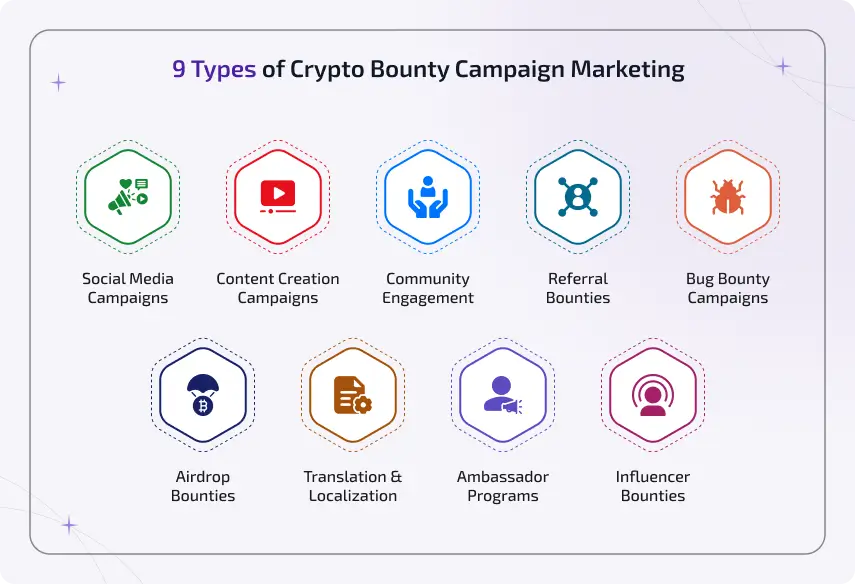
Mature projects with established user bases and active development teams offer more stable yields. Check their GitHub activity, community engagement, and previous campaign performance. Avoid projects that are launching solely to pump referral bonuses without a product-market fit.

Allocate capital based on your risk profile. High-yield, early-stage bounties carry higher rug-pull risks, while established platforms offer lower but more consistent returns. Diversify across multiple onchain referral bounties to mitigate the impact of any single project failure.
The AI Narrative Driving Onchain Referral Bounties
The artificial intelligence narrative is no longer just about model weights; it is reshaping how decentralized projects acquire users. AI crypto projects are leading the shift toward transparent, onchain referral mechanisms because their global, trust-minimized user bases demand verifiable rewards. This trend is turning onchain referral bounties into a primary growth engine for infrastructure projects and decentralized compute markets.
In decentralized compute markets, the economics of AI training and inference require massive, distributed user participation. Traditional centralized cloud providers cannot easily replicate the cost-efficiency of peer-to-peer GPU networks. Consequently, these platforms are adopting onchain referral bounties to incentivize node operators and data providers. The referral system acts as a trust layer, ensuring that contributors are rewarded fairly and transparently for their computational resources.
Infrastructure projects are also leveraging this trend. By embedding referral bounties directly into their smart contracts, they reduce the friction of user acquisition. Instead of relying on opaque marketing spend, these projects allocate budget to users who bring in new participants. This creates a self-reinforcing cycle where the value of the network grows with each new user, and the rewards are settled automatically onchain.
AI Crypto Market Dynamics
The intersection of AI and crypto is driving significant capital flows. As demand for AI models increases, so does the need for decentralized infrastructure. This has led to a surge in projects that combine AI capabilities with onchain incentive structures. Investors and users are increasingly looking for platforms that offer both technological innovation and transparent reward mechanisms.
This shift is not just about marketing; it is about building sustainable, decentralized ecosystems. By using onchain referral bounties, projects can align the interests of users, developers, and investors. The result is a more resilient and community-driven approach to growth, which is essential for the long-term success of AI crypto projects.
Impact on Decentralized Compute
Decentralized compute networks are particularly well-suited for onchain referral bounties. These networks rely on a distributed group of users to provide computing power. By rewarding users for referring new participants, these networks can scale quickly and efficiently. The transparency of onchain rewards ensures that all participants are treated fairly, which is critical for maintaining trust in a decentralized system.
As the AI narrative continues to evolve, we can expect to see more projects adopting this model. The combination of AI technology and onchain incentives offers a powerful tool for building decentralized communities. For those tracking the latest trends in onchain referral bounties, keeping an eye on AI crypto projects is a smart strategy.
Frequently asked questions on referral bounties
Helpful gear
Use these product recommendations as a starting point, then choose the size, material, and price point that fit how you actually use the gear.


As an Amazon Associate, we may earn from qualifying purchases.
No comments yet. Be the first to share your thoughts!