What are onchain referral bounties?
Onchain referral bounties are smart contract-based systems that reward users for bringing new participants into a protocol. Unlike traditional Web2 affiliate programs, which often rely on opaque tracking cookies and delayed payouts, these bounties execute automatically on the blockchain. This shift replaces manual verification with code, ensuring that rewards are distributed instantly and transparently.
In a Web2 model, a company might track a referral via a browser cookie, verify it through a third-party dashboard, and then issue a payout weeks later. The process is prone to errors, disputes, and lack of visibility for the referrer. Onchain referrals remove the middleman. When a new user signs up or makes a transaction using a unique referral code, the smart contract verifies the action and sends the reward directly to the referrer’s wallet. This creates a trustless system where the rules are public and the execution is immutable.
This transparency is the primary driver behind the growth of onchain referral bounties. Users can verify the exact terms of the bounty, track their earnings in real-time, and see the immediate impact of their actions. For projects, this means lower operational overhead and higher user engagement, as the incentive structure is clear and reliable. The result is a more efficient growth loop that aligns the interests of the platform and its users.
Infrastructure and Tooling Landscape
Building a referral system onchain requires choosing the right stack. In 2026, the market splits into two approaches: managed platforms that handle the heavy lifting, and modular infrastructure that lets you build custom logic. Your choice depends on how much control you need over the smart contracts and how quickly you want to launch.
Managed platforms like HackenProof and Formo offer turnkey solutions. They provide pre-built smart contracts and dashboards, allowing you to connect offchain referrals to onchain conversions without writing code from scratch. This is ideal for teams that prioritize speed and security over deep customization. According to their documentation, these platforms handle the verification of unique links and the distribution of rewards, reducing the risk of bugs in your core logic HackenProof Docs.
For teams needing more flexibility, modular infrastructure providers like Quicknode offer the building blocks. You can use their APIs and nodes to track referral events and distribute tokens, but you must design the payout logic yourself. This approach is common in Web3 gaming and DeFi protocols where referral rewards are tied to complex onchain actions, such as liquidity provision or trading volume. Quicknode’s own program, for example, offers a 50% reward on the first month’s fees for referred users, illustrating how infrastructure providers can incentivize their own ecosystem Quicknode Referrals.
When comparing these options, consider the tradeoff between ease of use and cost. Managed platforms often charge a flat fee or a percentage of rewards, while modular tools charge based on API calls and node usage. Below is a comparison of key features to help you decide.
| Provider | Type | Pricing Model | Integration Complexity |
|---|---|---|---|
| HackenProof | Managed Platform | Reward-based | Low |
| Formo | Managed Platform | Subscription + Usage | Low |
| Quicknode | Modular Infrastructure | Pay-per-use | High |
| Custom Stack | Self-Hosted | Gas + Dev Time | Very High |
If you are just starting out, a managed platform is usually the safest bet. The security audits and standardized code reduce the risk of exploits, which is critical when handling financial rewards. As your protocol grows, you can always migrate to a more custom solution if you need granular control over the referral mechanics.
The onchain referral market is shifting from hype to infrastructure.
The narrative around onchain referral bounties has moved beyond simple affiliate links. We are seeing a structural shift toward AI-driven infrastructure that automates tracking, fraud detection, and payout distribution. This transition is driven by the need to solve the high customer acquisition costs (CAC) that plague traditional crypto marketing.
Early referral programs were often fragmented, relying on centralized databases or manual verification. Today, the market is consolidating around modular protocols that integrate directly with smart contracts. This allows for real-time attribution without the latency of off-chain reconciliation. For builders, this means lower overhead and higher trust from users who can verify their rewards on-chain.
The market growth is closely tied to the broader crypto sentiment, particularly in AI-focused tokens. As AI narratives gain traction, the demand for efficient user acquisition tools increases. Platforms that offer transparent, automated bounty systems are capturing more market share because they reduce the friction of trust.
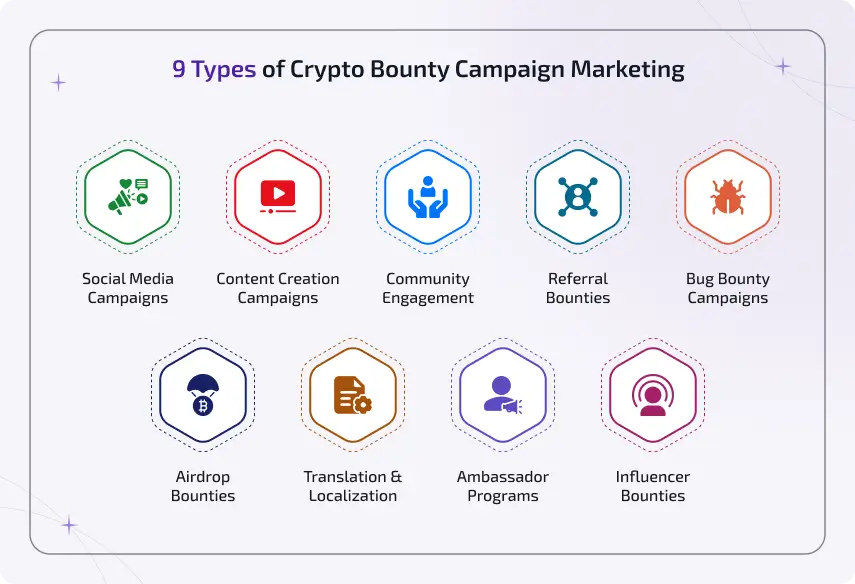
The volatility of the underlying assets often reflects these broader market trends. Understanding the price action of relevant AI and infrastructure tokens helps contextualize the potential rewards and risks associated with bounty programs.
Strategic Implementation Steps
Launching an onchain referral bounty program requires aligning smart contract logic with community incentives. Unlike traditional affiliate links, onchain bounties rely on verifiable transactions to trigger payouts. This workflow moves from technical deployment to active community onboarding.
Start by deploying a referral contract that handles unique code generation and payout distribution. Ensure the contract verifies onchain conversions, such as token swaps or liquidity provision, to prevent fraud. Use existing audited templates to reduce gas costs and security risks.
Connect offchain referral codes to onchain conversions using analytics tools like Formo. This allows you to track which users drive actual value, not just clicks. Proper integration ensures that rewards are distributed only when specific onchain actions are completed.

Set clear reward tiers based on the value of the referral. Consider fixed token amounts or percentage-based rewards for long-term engagement. Avoid uncapped rewards unless you have a substantial treasury, as seen in campaigns like Crypto.com’s Referral Rush, which offers CRO rewards with no cap.

Publish the program with clear documentation and a simple onboarding flow. Use social channels to announce the launch and highlight early adopters. Monitor the first few transactions to ensure payouts are processed correctly and adjust parameters if necessary.
Frequently asked: what to check next
Helpful gear
Use these product recommendations as a starting point, then choose the size, material, and price point that fit how you actually use the gear.


As an Amazon Associate, we may earn from qualifying purchases.
No comments yet. Be the first to share your thoughts!